

Field Notes · Pasture & Soil
The label tells you a little. The pasture tells you the rest.
Grass-fed, pasture-raised, natural, regenerative — the words on a package are a starting point, not the whole story. Here's what each one actually means, and why the way animals move across the land matters more than any of them.
Decoding the label
What the words on the package really mean.
Most of these terms are voluntary marketing claims. The USDA reviews a producer's paperwork before approving them, but the standards range from fairly strict to almost meaningless. Here's a plain-language guide.
No artificial ingredients or added color, and only minimally processed after slaughter.
What it doesn't tell youAnything about how the animal lived, what it ate, or whether it ever saw a pasture.
For cattle and sheep, a diet of forage only after weaning, with access to pasture during the growing season. Partial claims must spell out the actual feed mix.
What it doesn't tell youHow the pasture is managed. An animal can eat only grass on land that's overgrazed and worn out.
The producer has documented that animals spent most of their lives on land covered in living grasses and plants, not a feedlot.
What it doesn't tell youHow often animals move, how dense the herd is, or how long the land rests between grazings.
Mostly used for poultry: the birds have access to the outdoors.
What it doesn't tell youHow big that outdoor area is, what's growing on it, or how many birds actually go outside.
Certified organic feed, no antibiotics or added hormones, and for grazing animals, at least 120 days a year on pasture getting a meaningful share of their diet from it.
What it doesn't tell youOrganic animals can still be grain-finished, and the rule sets a floor on grazing, not a standard for soil health.
Farming that aims to leave soil, water and biodiversity better than it found them. Some third-party programs now certify it.
What it doesn't tell youThere's no single legal definition, so the claim is only as good as the practices and verification behind it.
The common thread: labels mostly describe what an animal ate or where it was allowed to be. The thing that makes the biggest difference — how the land is managed — rarely fits on a sticker.
A day in rotational grazing
Small moves, every day.
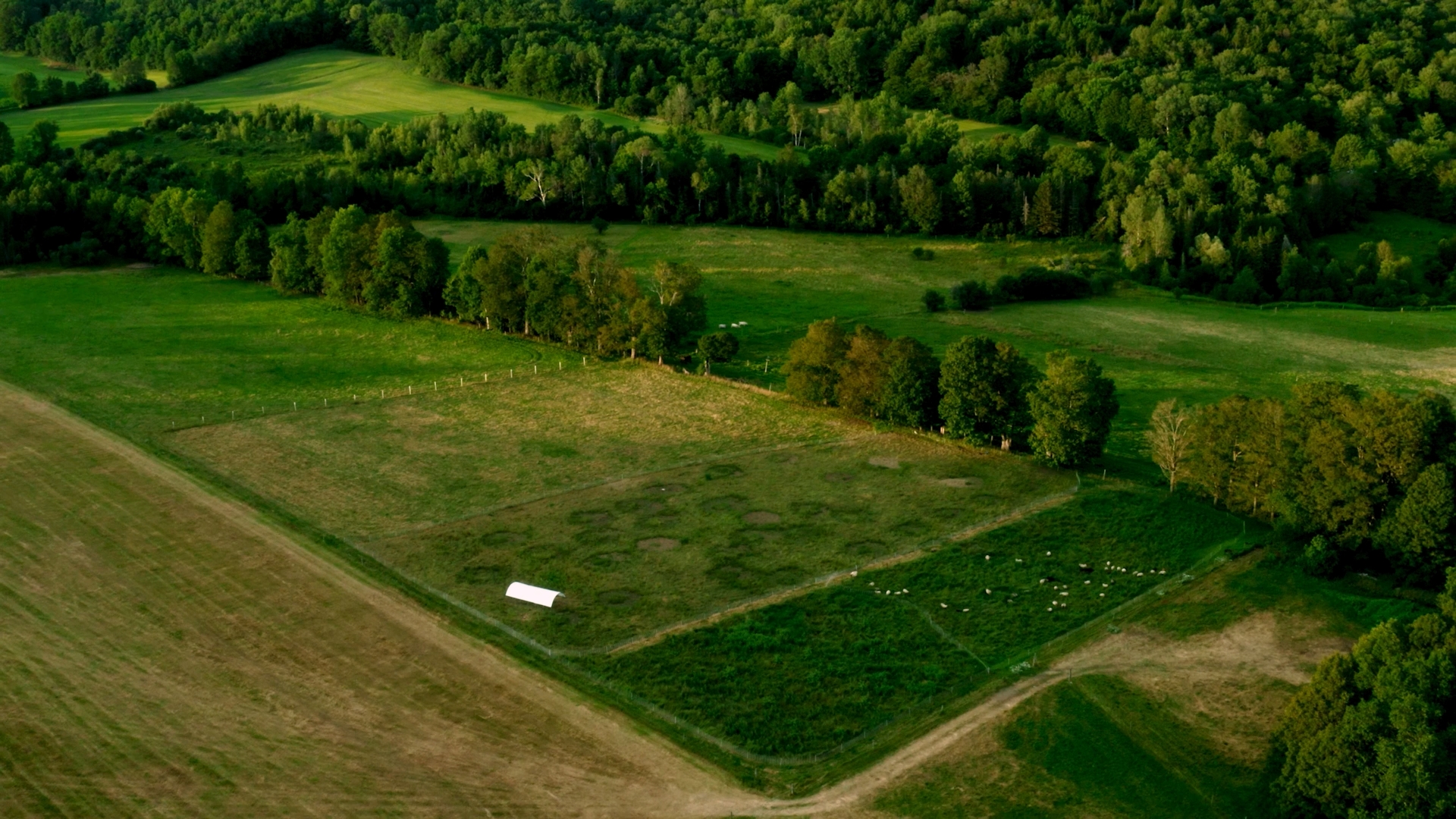
Rotational grazing means moving animals to fresh ground often, sometimes daily, and then letting each patch of pasture rest and regrow before they come back. It's how grazing animals moved across grasslands for thousands of years, with portable fencing standing in for the predators that kept herds bunched and on the move. In the growing season, a typical cycle looks like this:
What happens underground
Soil health is where better food starts.
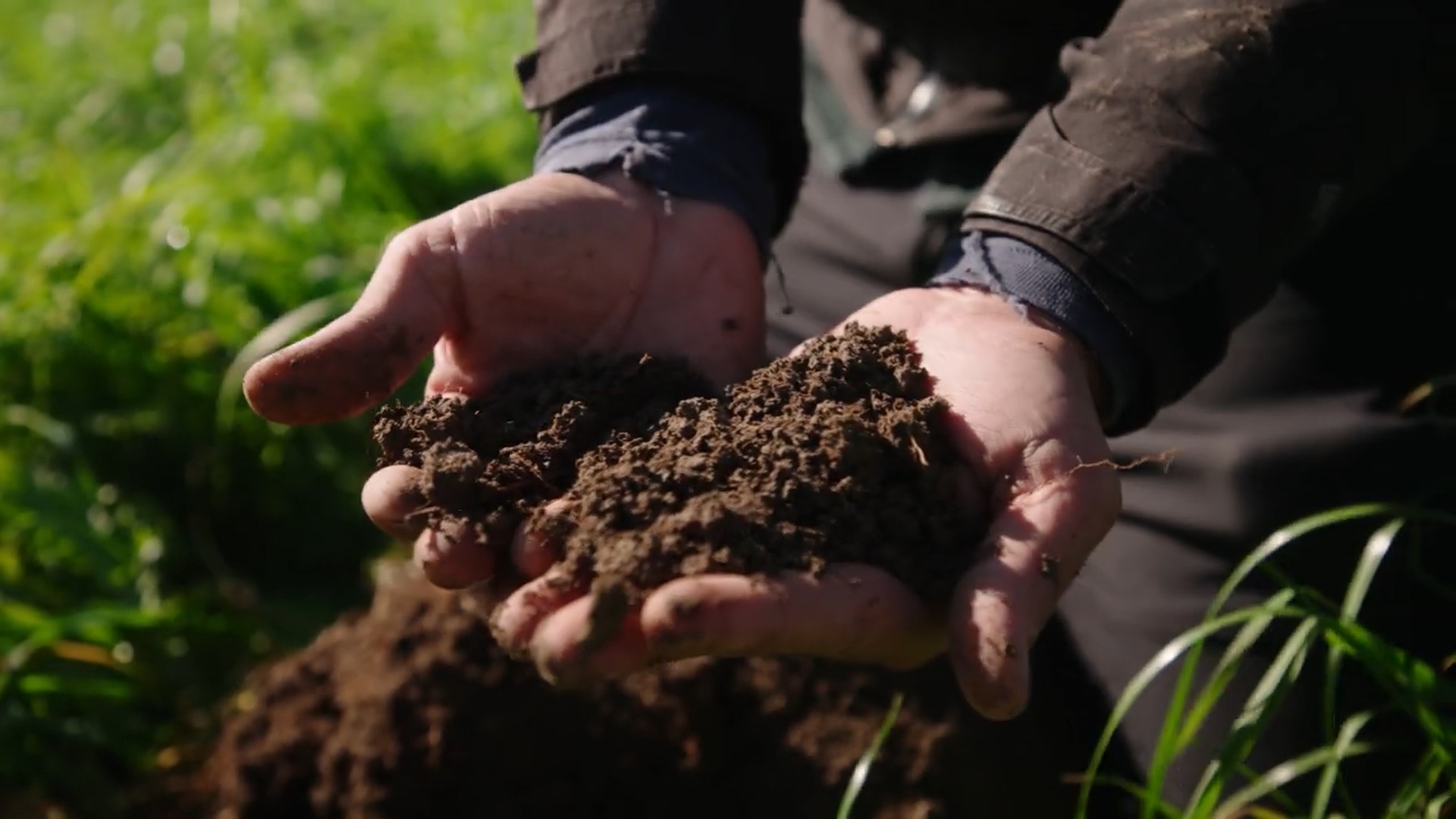
The most important part of a pasture is the part you can't see. Healthy soil is alive: a teaspoon of it holds more microorganisms than there are people on Earth. Rotational grazing is, at heart, a way of feeding that underground ecosystem.
Roots feed microbes
Growing plants push sugars out through their roots to feed bacteria and fungi. In return, those microbes — including networks of mycorrhizal fungi — help plants reach water and minerals. A grazed-then-rested plant keeps that exchange going strong.
Carbon goes into the ground
Some of that root carbon becomes stable soil organic matter. Research on well-managed rotational grazing has found soil carbon gains, though results vary with climate, soil type and how long a farm has been at it. It's slow work measured in decades.
Soil that holds water
More organic matter and more roots mean soil that soaks up rain like a sponge rather than shedding it. That means less runoff into streams and the lake, and pasture that stays green longer through a dry spell.
More kinds of plants
Rested pastures fill in with a mix of grasses, clovers and broadleaf plants. A more diverse pasture feeds a more diverse set of soil life — and, as we'll see, a more varied diet for the animals.
From pasture to plate
Why it shows up in nutrient-dense, pasture-raised meat.
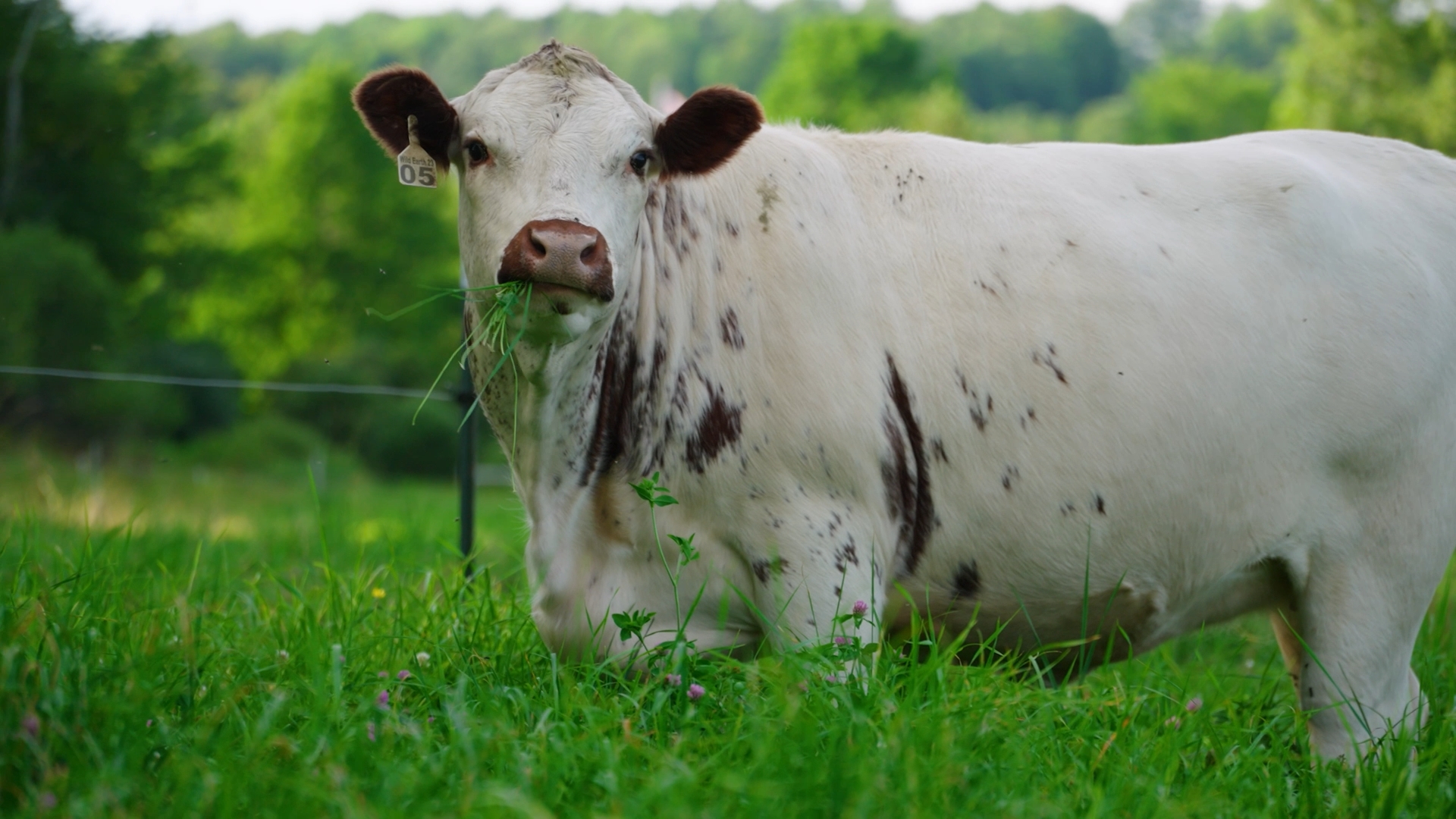
Animals are what they eat, and an animal moving onto fresh, diverse pasture every day eats very differently from one eating a ration in a feedlot. Published research comparing the two points to real differences:
More omega-3s
Fresh green forage is rich in the plant form of omega-3 fat. Grass-finished beef consistently shows more omega-3s and a healthier ratio of omega-6 to omega-3 than grain-finished beef.
More CLA
Conjugated linoleic acid, a fatty acid that researchers are studying for its potential health benefits, tends to be higher in meat and dairy from grass-fed animals.
Vitamins from green plants
Pasture-finished beef carries more beta-carotene (the source of vitamin A, and why grass-fed fat often looks a little golden) and more vitamin E. Studies of pastured hens have found similar vitamin gains in their eggs.
A richer mix of plant compounds
Newer research suggests animals grazing diverse pastures carry more of the antioxidants and other compounds found in the plants they eat. The more varied the pasture, the more varied the meat.
An honest note: these differences depend on the quality of the pasture, the season, and the species. Grass-fed beef is still not a substitute for fish as an omega-3 source, and pigs and chickens eat grain alongside what they forage, so their diets shift less. But the pattern is consistent: the greener and more diverse the diet, the more those nutrients show up on your plate.
Taste the difference
Food that started with healthy soil.
Every cut we sell comes from animals raised on rotationally grazed pastures here in Vermont. Stop by the farm store, find us at market, or order online for home delivery.
When you're standing in front of a meat case, labels are a useful shortcut. But the best way to know how your food was raised is to know who raised it. Come walk the pastures with us sometime — we're always glad to show you what's happening under your feet.
See you in the field,
Bruce Hennessey & Beth Whiting
Label descriptions summarize USDA Food Safety and Inspection Service guidance on animal-raising claims and USDA National Organic Program rules; they're simplified for general reading. Nutrition comparisons reflect published research averages; individual products vary. This post is for general information and is not medical or dietary advice. Further reading:
- USDA FSIS, Guideline on Substantiating Animal-Raising or Environment-Related Labeling Claims (2024).
- Daley et al., "A review of fatty acid profiles and antioxidant content in grass-fed and grain-fed beef," Nutrition Journal (2010).
- Karsten et al., "Vitamins A, E and fatty acid composition of the eggs of caged hens and pastured hens," Renewable Agriculture and Food Systems (2010).
- van Vliet et al., "Health-promoting phytonutrients are higher in grass-fed meat and milk," Frontiers in Sustainable Food Systems (2021).